Learn, take action and re-shape what surrounds young Queenslanders.
Start where you are and become a Systems Weaver.
Lasting change for Queensland kids
Families, friends, schools, services, culture, place, the media and the economy all shape how children grow. When what surrounds children works well, children thrive. We’re all part of these systems, so we all have a part to play.
We’re bringing people of different ages together (young people and people over 30) to create change that lasts for generations.
New to this work, or already leading change?
What you bring from your life, work or community belongs here.
Start with free Learning bites, or go deeper with the Systems Weaving Lab.
You’ll explore different ways to bring people together, see what shapes a system, work across different views and turn insight into action.
Watch how this is taking shape!
The Systems Weavers is part of Queensland Kids Partnership (QKP) where people and organisations are working to transform systems, so all young Queenslanders can thrive.
What is a Systems Weaver?
Become a Systems Weaver
Systems Weavers build the change children need, for generations to come. They work with relationships, conditions and patterns across systems so children and young people can thrive.
They connect people and perspectives, hold necessary tensions, and help collective possibilities take shape over time.
It’s a way of working you can step into, wherever
you are in Queensland.
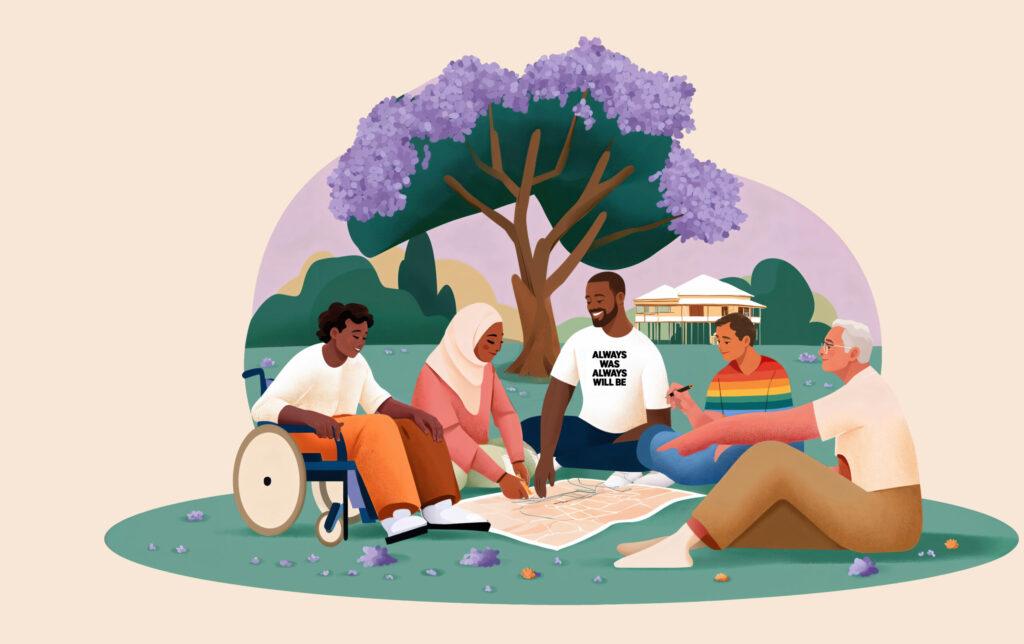
Your experience is needed now
You don’t need to work directly with children to be a Systems Weaver. Your role is to join with others to shape the world and environments that surround children and young people.
Sounds new and different?
If you’ve seen what isn’t working for kids and want to do something about it, you have something to bring.
Familiar with the idea of changing systems?
If you know how systems work, you can now help them work better for kids and young people.
You may already be involved with QKP and want to explore more.
We’d love you to stay involved and take the next step on your journey.
Find your own way into Systems Weaving
Start small or go deep. You can move from one to the next when you are ready.
Learning bites
Short courses you can do with other Systems Weavers, or self-guided learning you can do in your own time.
Find out more
Learning that grows
Want your organistion, collaboration or network to learn together? Learning can come to you!
Find out more
Systems Weaving Lab
A year of shared learning and real-world practice on how to shift systems so more young Queenslanders thrive.
Find out more
Explore the living guide to being a Systems Weaver
Better than we found it sets out shared principles, a shared language and the capabilities that support this work.
All the learning offerings are underpinned by this Living Guide.
It is called a Living Guide because it will adapt over time as more Queenslanders apply and grow it. It is a starting point, to be tested and shaped by the Systems Weaver Network. Think of it as a compass, not a map.
More about Systems Weavers and why this work is important
What is the Systems Weaver initiative?
Being a Systems Weaver is about learning, taking action and re-shaping what surrounds children and young people across Queensland.
In all its work, the Systems Weaver Initiative is intergenerational – bringing young people and people over 30 together. It is part of Queensland Kids Partnership (QKP), a partnership of people and organisations working to transform systems, so all young Queenslanders can thrive.
What do you mean by a “system”?
Systems are webs of relationships that are constantly growing, changing and responding, like a forest, or a reef. When we use this phrase, we mean that children don’t grow up inside a fixed structure. They grow up inside something alive — shaped by the people, places, cultures, histories and the natural world around them. And just like in nature, when one part of that web is damaged or missing, it affects everything else.
What is the difference between Systems Weaving and leading?
Systems Weaving is often referred to as stewardship.
Stewardship can be understood as an evolution of leadership — what leading becomes when working within complexity. Where leadership often focuses on driving change, stewardship focuses on tending the conditions that allow children, families, communities and the natural world to thrive — now and into the future. It shifts the focus from leading change to being accountable for what must be sustained and renewed across generations.
Why does this matter for children?
What surrounds kids shapes kids. When families, governments, schools, services, culture, place, the media and the economy align on what is important for health and wellbeing, kids thrive. We are all part of these systems, so we all have a part to play in shaping them. People made these systems, which means people can reshape them.
Why is this needed now?
The challenges kids face today are connected. They overlap and build on each other, so no single person or policy can shift them alone.
We already know a lot about what children need to thrive. The opportunity now is to work on the conditions around kids, not just the problems in front of us.